

At Restored Hope Counseling, we help people with all types of issues, and all types of problems. Many of our clients have had rough things happen to them – both in childhood and as adults. Their current lives reflect these issues – some have addictions, others suffer from depression or anxiety. Still others have eating disorders. Some feel stuck in patterns that they just can’t seem to break. One of the ways that we like to help these clients is by using the therapeutic modality called Internal Family Systems (IFS) which we’ve written about before. This is such a useful tool, we thought we would say a bit more about it here.
Maybe you’ve noticed that you often feel torn between different parts of yourself—one part that wants to take a risk while another part holds you back. If so, you’ve already experienced what IFS therapy addresses. Rather than seeing these inner conflicts as problems to eliminate, IFS offers a different perspective: What if these conflicting voices are actually parts of an internal system, each trying to help you?
What is Internal Family Systems (IFS)?
Developed by psychologist Richard Schwartz in the 1980s, IFS is a therapeutic approach based on a simple insight: We all have multiple “parts” within us that form a kind of internal “family.”
You probably already know this intuitively. Have you ever said something like this? “Part of me wants to go to the party, but another part just wants to stay home.” These aren’t just figures of speech—IFS suggests they’re genuine aspects of our psyche, each with its own perspective and intentions.
The Three Types of Parts in IFS
IFS describes these parts of ourselves in three ways:
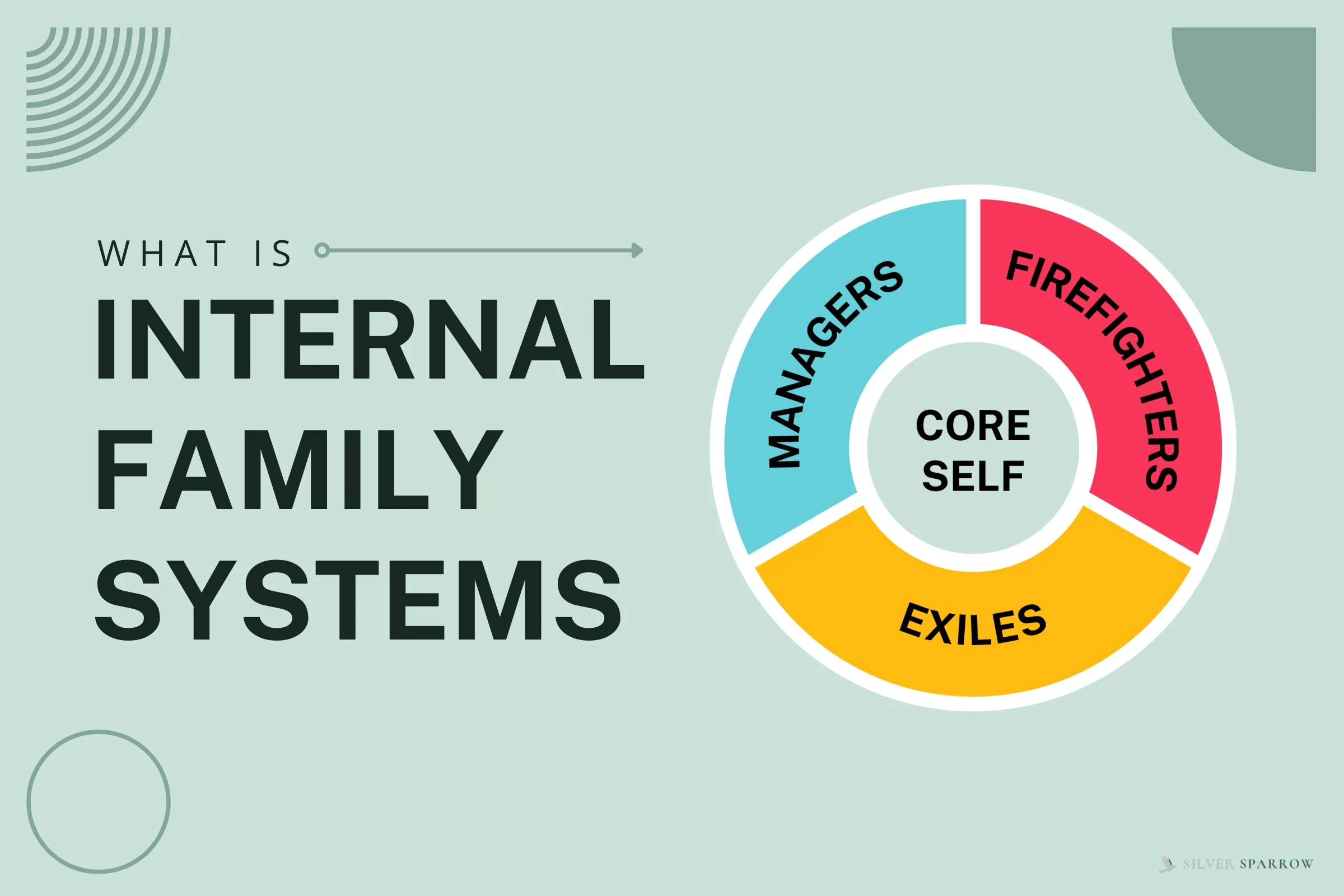
Exiles are the young, vulnerable parts of ourselves that carry painful emotions from our past like shame, fear, hurt. Because these feelings are overwhelming, other parts of our system work hard to keep them hidden away – hence the word “exile.”
Managers are proactive protectors that maintain control and prevent exiles from being triggered. They show up as perfectionism, people-pleasing, intellectualizing, or that critical voice that wakes you at 3 AM to worry about tomorrow’s presentation.
Firefighters are emergency responders. When painful feelings break through, firefighters spring into action with immediate relief: binge eating, substance use, rage, or compulsive behaviors. They put out fires—often in ways that create new problems.
Here’s the key insight: all parts, even those with destructive behaviors, believe they’re helping you. The part that pushes people away thinks it’s protecting you from abandonment. The part that criticizes you is trying to make you “better” so others won’t criticize you. The part that wants to drink an entire fifth of whiskey is trying to keep you from feeling things from your past that hurt too much. These parts of you are not enemies—they’re protectors doing the best they know how.
The Self
At the center of IFS is what Schwartz calls the “Self”—your core essence that exists beneath all your parts. Schwartz believes everyone has this core essence that is characterized by the “8 Cs”: Curiosity, Calm, Clarity, Compassion, Confidence, Courage, Creativity, and Connectedness.
This Self allows you to relate to your parts with curiosity and compassion rather than judgment. It can help you listen to what your parts are trying to tell you and help them heal.
Why This Matters
Understanding IFS can fundamentally shift how you relate to yourself. That critical inner voice? It’s a manager part protecting you from failure. The urge to scroll social media when you’re stressed? It’s a firefighter distracting you from overwhelming feelings.
Instead of asking “What’s wrong with me?” you can ask “Which part is this, and what is it protecting me from?”
This framework moves you from self-criticism to self-compassion, from internal war to internal dialogue, from fragmentation to wholeness. IFS doesn’t ask you to eliminate “bad” parts—it invites all parts of you to the table, trusting that when your core Self leads, all your parts can find healthier ways to contribute.
More about IFS in the next blog
In Part 2, we’ll explore how IFS therapy works—the process of getting to know your parts, healing exiles, and experiencing transformation. We’ll also look at therapeutic benefits and what to expect in therapy.
For now, simply notice: What parts of you showed up as you read this? Just notice them with curiosity and without judgment. That noticing is the beginning of the IFS journey.